
An Incredibly Easy Method That Works For All
10 Apr 2021
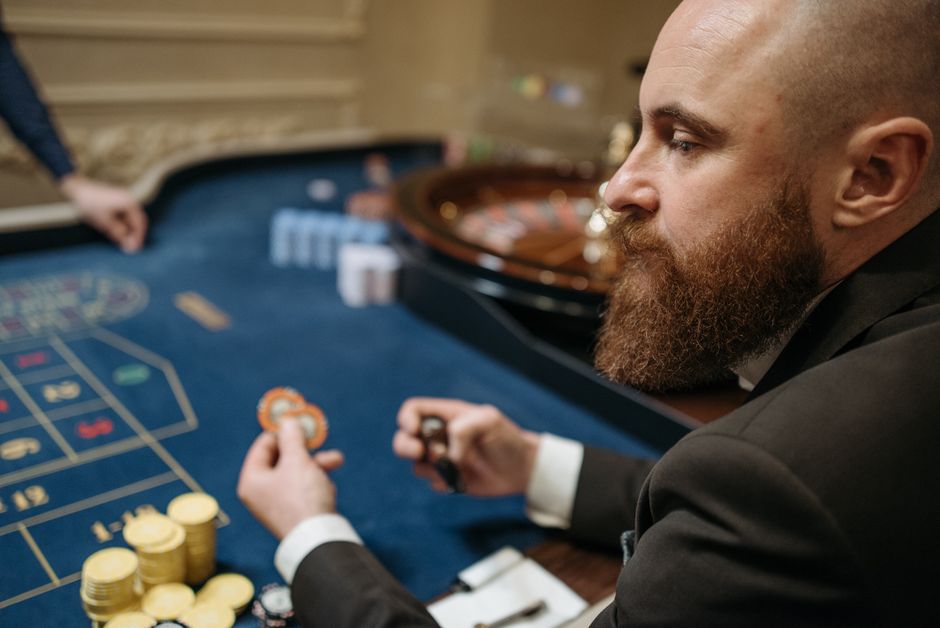
Every gambler has heard the phrase "the house always wins." It's the kind of saying that gets tossed around casually at poker tables and in casino forums, usually right after someone loses a hand they were sure they'd win. But here's the thing — that phrase is both true and deeply misleading. The house edge exists, yes, but understanding how it actually works is the difference between playing like a fool and playing like someone who treats iGaming as entertainment rather than a retirement plan. Let's dig into how modern gambling really functions, from slots to sportsbooks, and what separates a smart player from a statistic.
Take a standard American roulette wheel. It has 38 pockets: 1 through 36, plus a single zero and a double zero. If you bet on red, you're covering 18 of those pockets. Your odds of winning are 18/38, or about 47.37%. The payout, however, is 1:1 — meaning you risk $10 to win $10. If the payout were fair, it would be 18:20 or roughly 1.11:1. That gap between the true odds and the payout is the house edge, and in this case it sits at 5.26%. See สล็อตเว็บตรง for a side-by-side comparison.
Now run the same math on a European wheel, which only has one zero. The house edge drops to 2.7%. Same game, same rules, dramatically different long-term cost. This is the kind of thing recreational players overlook constantly. They pick a table because it "looks lucky" instead of checking something as boring and decisive as the wheel configuration.
Slots work similarly but in the background. A machine with 96% RTP returns, on average, $96 for every $100 wagered over millions of spins. You can't see that from a single session — variance hides it. A 96% RTP slot might chew through your entire bankroll in twenty minutes or triple it in five. Over time, though, the math catches up. That 4% is how the operator keeps the lights on.
Sportsbooks operate on a different model. They don't need a 5% edge on every bet — they need volume and balance. The classic example is a moneyline with -110 odds on both sides. You risk $110 to win $100, so you need to win 52.4% of your bets just to break even. The book's theoretical hold on a balanced two-way market is around 4.5%.
But sharp bettors do exist, and books know it. That's why they limit accounts, move lines, and use algorithms to detect who's actually good. If you're consistently beating closing lines, expect your maximum bet to shrink fast. This is worth knowing if you're considering sportsbetting seriously:
Poker is the one game in the iGaming ecosystem where you're not really playing against the house. You're playing against other players, and the house just takes a rake — usually somewhere between 2.5% and 10% of the pot, capped at a few dollars. That means a skilled player can genuinely win long-term, unlike slots or roulette where the math is fixed against you.
The catch is that "skilled" is doing a lot of heavy lifting there. The modern online poker pool is brutal. GTO solvers, HUDs, and years of shared strategy have compressed the edge that used to exist. A player who crushed $1/$2 in 2010 would struggle at $0.50/$1 today. The games haven't gotten harder because players got smarter individually — they got smarter collectively, and that matters enormously.
If you want to take poker seriously, focus on these areas first:
Casino bonuses are the most misunderstood part of iGaming. On the surface, a 100% deposit match up to $500 sounds incredible. In practice, it usually comes with a wagering requirement — often 30x to 50x the bonus amount — and game weighting rules that make slots count 100% toward the requirement but blackjack count only 10%.
Here's a quick reality check. Take a $100 bonus with a 40x wagering requirement. That's $4,000 you need to bet before withdrawing anything. On a slot with 96% RTP, your expected loss on that $4,000 is $160. The bonus is worth less than the expected cost unless you'd have played those spins anyway. This is why bonus hunters focus on low-wagering, high-RTP offers and ignore the flashy ones.
A few things to check before claiming any welcome bonus:
Every regulated operator has to display responsible gambling tools, and most players scroll right past them. That's a mistake. Deposit limits, session timers, and self-exclusion are genuinely useful, and they're not there to ruin your fun — they're there because the math we've been discussing has a real-world cost when it interacts with human psychology.
The uncomfortable truth is that slot machines are engineered for immersion. Near-misses, variable reward schedules, and rapid spin cycles are all borrowed straight from behavioral psychology research. Knowing this doesn't make you immune, but it does help you set honest limits before you're three hours deep and chasing a loss.
The iGaming industry is projected to clear over $100 billion globally in gross gaming revenue within the next couple of years, and it's growing fastest in markets that only recently legalized. That means millions of new players are walking in without the background knowledge that used to get passed around in land-based casinos. Understanding house edges, RTP, rake, and bonus structures isn't about becoming a professional. It's about treating gambling like any other paid entertainment: know the price, decide if it's worth it, and walk away when it stops being fun. The house will always have its edge. Your job is to make sure your edge — the entertainment you get per dollar — is worth the cost.

Bright Tales Real stories, useful guides and the occasional recommendation, all in one calm corner of the web.

April 25, 2019 at 10:46 am
Take in the iconic skyline and visit the neighbourhood hangouts that you've only ever seen on TV. Take in the iconic skyline and visit the neighbourhood.


Want to be notified when we launch a new template or an udpate. Just sign up and we'll send you a notification by email.


Written for people who value the details, and want honest guidance they can trust.

Soldman Kell
April 25, 2019 at 10:46 am
Take in the iconic skyline and visit the neighbourhood hangouts that you've only ever seen on TV. Take in the iconic skyline and visit the neighbourhood.